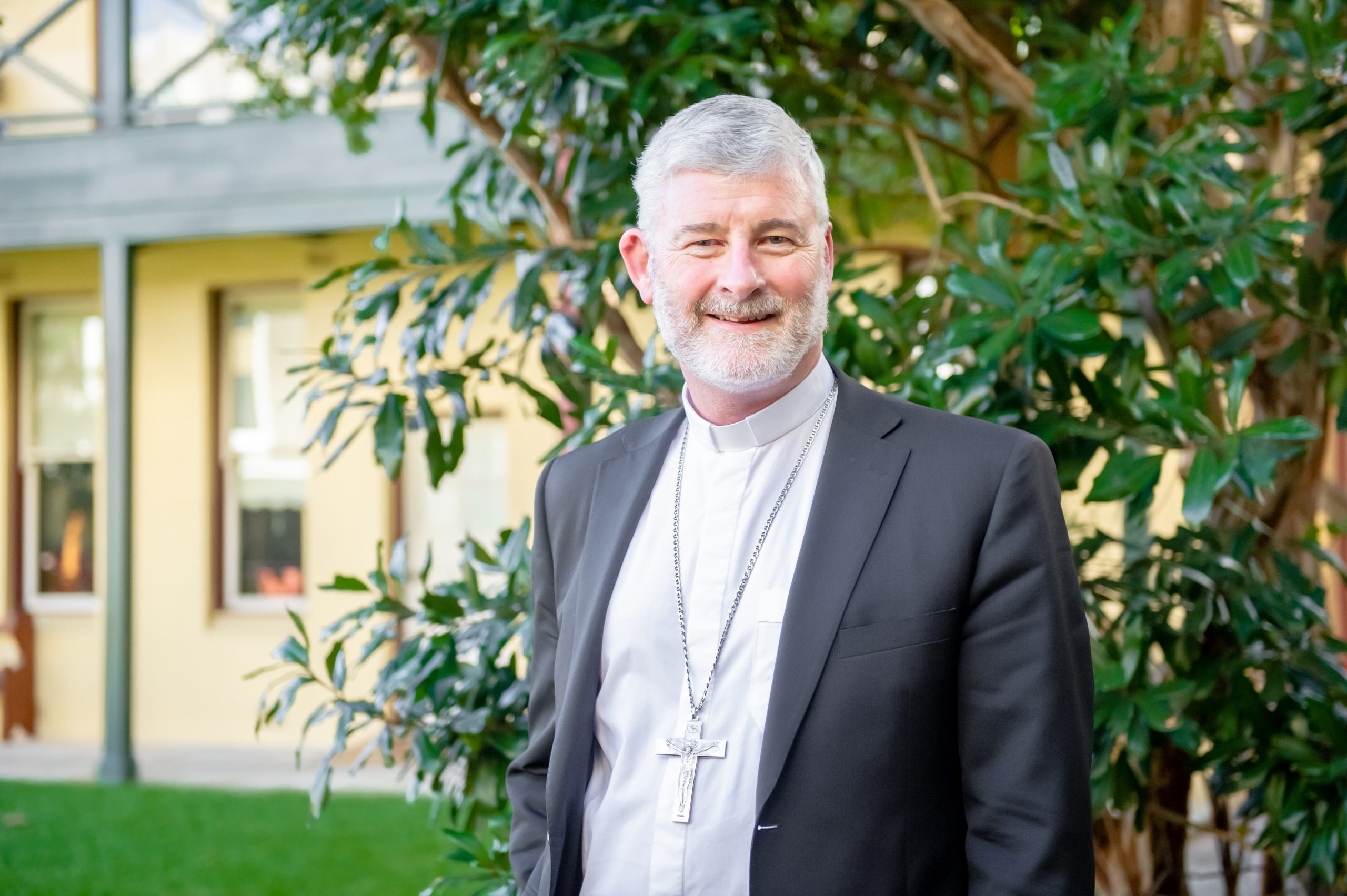
One of my ministries in the wider Church is as Catholic co-chair of the international dialogue between Catholics and Methodists.
In our Australian context, that involves the Uniting Church of Australia and the Wesleyan Methodist Church.
This week, the commission is meeting in El Salvador, which we chose as the location for this year’s gathering because of the shared veneration that Methodists and Catholics have for St Oscar Romero, who was Archbishop of San Salvador from 1977 until his assassination in 1980, while he was celebrating Mass.
He is one of many Salvadoran priests, religious and lay people who were martyred for their faithful witness to the Gospel and their denunciations of the injustice, violence and killings that were so common during the country’s civil war.
Around 70,000 civilians were killed or “disappeared” over the course of the war, and Archbishop Romero was a vocal and inspiring advocate for those who were suffering.
Today, St Oscar Romero is celebrated as a national hero and defender of the people.
He continues to be a powerful witness to Jesus’ affirmation of the dignity and value of the most vulnerable.
Earlier this week, our dialogue commission visited his tomb in San Salvador Cathedral, which is clearly a place of great popular devotion.
One of the striking features of the bronze sculpture on St Romero’s tomb are four female figures rising at the corners, each one draped in his cloak and carrying one of the books of the Gospels.
They evoke one of Romero’s famous quotes: “If they kill me, I will arise again in the Salvadoran people.”
The Gospels carried by the women highlight that St Romero never focused just on the political aspects of events.
He was always intent on proclaiming the Gospel, strengthening people’s faith, and calling for a response of conversion and repentance, especially in those responsible for the injustice and violence.
As he said in a homily only a week before his martyrdom:”‘Nothing is so important to the Church as human life, as the human person, above all, the person of the poor and the oppressed, who, besides being human beings, are also divine beings, since Jesus said that whatever is done to them he takes as done to him. That bloodshed, those deaths, are beyond all politics. They touch the very heart of God.”
Last month, Pope Leo XIV gathered with representatives from various Christian denominations and communities for a Commemoration of Martyrs and Witnesses of the Faith in the Twenty-first Century: “women and men, religious, lay people and priests, who pay with their lives for their fidelity to the Gospel, their commitment to justice, their battle for religious freedom where it is still being violated, and their solidarity with the most disadvantaged.”
The Pope prayed that in this Jubilee Year of Hope we might be inspired by “the hope of these courageous witnesses of the faith.”
After recalling examples of martyrs from various Christian traditions, Pope Leo reiterated a message from the recent Synod: “the ecumenism of blood unites Christians of different backgrounds who together give their lives for faith in Jesus Christ. The witness of their martyrdom is more eloquent than any word: unity comes from the Cross of the Lord.”
Later this week, our ecumenical group will be privileged to celebrate the Eucharist in the chapel where St Oscar Romero was assassinated. As we celebrate our unity in the Cross of the Lord, we will give thanks for all those who continue to witness courageously to the Gospel around the world, and pray together that all Christians might be strengthened in faith and hope, and in our commitment to work for justice, unity and peace.